Evaluating 3D Christmas Scene Mug Covers for Professional Sublimation
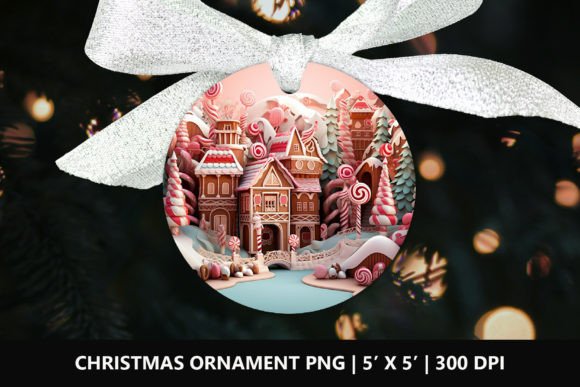
The market for seasonal merchandise is saturated with flat, two-dimensional graphics that often fail to capture the depth and atmosphere associated with holiday aesthetics. For creators and small business owners operating in the print-on-demand or personalized gift sector, differentiation is a matter of technical execution as much as artistic choice. 3D Christmas Scene Mug Covers represent a specific category of digital assets designed to bridge this gap. Unlike standard clip art overlays, these files utilize shading, perspective, and lighting effects to simulate three-dimensional environments on a cylindrical surface. When applied correctly, they transform a standard ceramic vessel into an immersive visual experience rather than a mere canvas for text.
However, the effectiveness of these assets is entirely dependent on the user's existing infrastructure and technical proficiency. These are not plug-and-play solutions for beginners; they are professional-grade templates intended for operators who already possess a strong grasp of sublimation dynamics. Understanding the specific characteristics, file specifications, and practical limitations of these 3D scene covers is essential for determining whether they align with your current production capabilities and business goals.
Technical Specifications and File Integrity
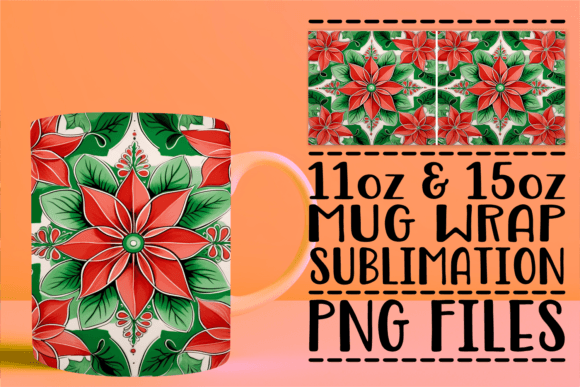
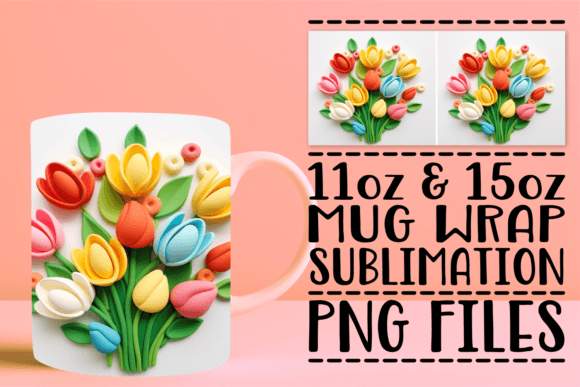
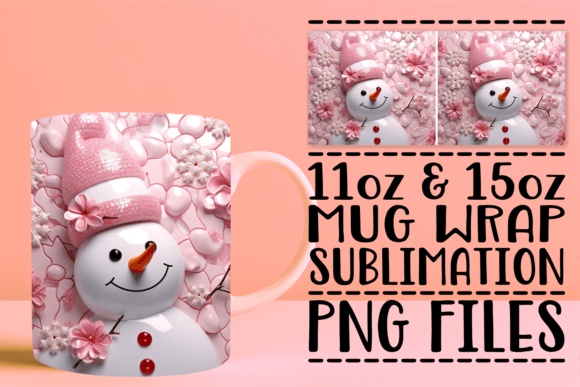
The primary value proposition of any digital sublimation asset lies in its resolution and dimensional accuracy. This specific package includes two PNG files optimized explicitly for 11oz and 15oz mug wraps. The distinction between sizes is critical; stretching an 11oz design to fit a 15oz mug inevitably results in pixelation and distortion of the 3D effect, while shrinking a 15oz design creates unnecessary whitespace or cropping issues. Having dedicated files for each standard size ensures that the perspective lines and focal points remain intact during the transfer process.
Both files are rendered at 300 DPI (dots per inch), which is the industry benchmark for high-quality sublimation printing. In the context of 3D scenes, resolution is even more significant than with flat graphics. The illusion of depth relies on subtle gradients and fine details in shadows and highlights. If a file were saved at a lower resolution, these gradients would band or appear muddy after heat pressing, destroying the three-dimensional illusion. The 300 DPI specification ensures that when the ink transitions from paper to coating, the micro-details necessary for the optical illusion remain sharp.
It is important to note that these are PNG templates. This format supports transparency and lossless compression, making it ideal for layering over colored backgrounds or integrating with other design elements in software like Photoshop, GIMP, or Affinity Photo. However, because they are raster-based templates rather than vector files, they offer flexibility in color grading and compositing but do not allow for infinite scaling without quality loss. Users must work within the provided dimensions to maintain fidelity.
Practical Application and Workflow Integration
Integrating 3D Christmas Scene Mug Covers into a production workflow requires more than just opening a file. The "3D" aspect is a pre-rendered visual effect, meaning the lighting source and vanishing points are fixed. This presents both an advantage and a constraint. On the positive side, the heavy lifting of rendering complex lighting and shadows has been done for you, saving hours of design time. On the negative side, you cannot easily alter the angle of the scene or move objects within the 3D space without breaking the realism.
For professionals, this means the asset serves best as a foundational background or a complete wrap-around scene where personalization is added in designated negative spaces. Successful utilization involves understanding how the design wraps around the cylinder. A common pitfall in mug sublimation is failing to account for the seam or the handle placement. High-quality 3D wraps are typically designed with safe zones, but the operator must still verify alignment during the physical pressing stage. The digital perfection of the file can be negated by poor physical registration.
Furthermore, color management plays a pivotal role. 3D scenes often contain rich darks and vibrant highlights to create contrast. Sublimation inks can sometimes shift during the heating process, potentially flattening the dynamic range. Experienced users will likely need to perform test prints or adjust ICC profiles to ensure the printed output matches the screen preview. The files provide the data, but the printer and press determine the final tactile result.
Audience Fit and Operational Prerequisites
There is a distinct boundary regarding who should acquire these files. The product description explicitly states that support is exclusively available for file-specific issues, not for teaching sublimation processes. This policy acts as a necessary filter. These 3D Christmas Scene Mug Covers are appropriate for:
- Established POD Sellers: Entrepreneurs who already have a validated mug product line and need fresh, high-impact seasonal designs to boost Q4 revenue.
- Professional Crafters: Makers with dialed-in equipment settings who understand temperature, time, and pressure variables for different mug coatings.
- Graphic Designers: Creatives who need a reliable base layer to expedite custom client orders without building 3D environments from scratch.
- Marketing Teams: Businesses creating branded holiday merchandise where visual polish reflects corporate professionalism.
Conversely, these assets are likely unsuitable for individuals who have never operated a heat press, lack RIP software or advanced image editing tools, or are unsure how to manage color profiles. The learning curve for sublimation is steep, and attempting to learn the craft using complex 3D assets is inefficient. Beginners should start with simpler, flat designs to master the mechanical aspects of transfer before investing in premium 3D templates.
Assessing Value and Long-Term Utility
When evaluating the return on investment for digital assets, one must consider versatility and longevity. While "Christmas" implies a seasonal limitation, the quality of the 3D rendering extends the utility of these covers. High-end 3D scenes often avoid overly specific dated references (like "2024"), allowing the same file to be used across multiple holiday seasons. This amortizes the cost over several years, provided the storage and file management practices are sound.
The inclusion of both 11oz and 15oz variants also enhances value. Many designers sell these sizes separately or only provide one size expecting the user to resize. Providing native resolutions for both standard mug sizes demonstrates an understanding of professional production needs. It reduces prep time and eliminates the guesswork associated with resampling images, which directly translates to labor savings during peak season rushes.
From a presentation standpoint, 3D covers generally command higher perceived value from end consumers compared to flat vinyl-style decals. They photograph better for listings because the depth catches light in product mockups and real-life photos. For sellers on platforms like Etsy or Shopify, this visual superiority can improve click-through rates and justify a higher price point. The asset is not just a decoration; it is a merchandising tool.
Limitations and Support Boundaries
Transparency regarding support is a hallmark of professional digital marketplaces. The stipulation that guidance on sublimation processes is unavailable is actually a positive indicator of quality. It suggests the creator focuses on asset integrity rather than acting as a general technical support desk. Buyers should respect this boundary by ensuring their own house is in order before purchase.
If you encounter issues such as corrupted downloads, incorrect sizing, or artifacts within the 300 DPI file itself, the creator offers assistance. This targeted support model ensures that legitimate product defects are resolved quickly without the creator being overwhelmed by basic operational questions. However, if your print comes out blurry due to incorrect press pressure or the colors look wrong due to an uncalibrated monitor, those are workflow issues outside the scope of the file's intended support.
Additionally, users should be aware of licensing terms typically associated with such files. While not detailed in the immediate snippet, professional use usually allows for physical product sales but prohibits redistributing the digital file itself. Always verify the specific license included with the download to ensure compliance with your intended business model.
Final Considerations for Implementation
3D Christmas Scene Mug Covers offer a sophisticated solution for elevating seasonal merchandise, provided the user possesses the requisite technical foundation. They excel in resolution, dimensional accuracy, and visual impact, serving as efficient assets for experienced sublimation professionals. The dual-size inclusion and high-DPI standards address real-world production pain points, making them a practical addition to a serious creator's library.
Ultimately, the decision to purchase should be based on an honest assessment of your current capabilities. If you have the equipment, the software, and the experience to execute high-quality transfers, these files can significantly enhance your product catalog. If you are still mastering the basics of sublimation, prioritize education and simpler assets first. For the qualified professional, however, these 3D scenes represent a valuable intersection of artistic quality and manufacturing efficiency, ready to be deployed in your next holiday campaign.