Evaluating the 3D Snowflake Papercut SVG for Layered Christmas Decor and Crafting
The evolution of digital crafting has transformed how holiday decorations are conceptualized and produced. Among the most versatile digital assets available to modern makers is the 3D Snowflake Papercut SVG. This specific type of file is designed not merely as a flat silhouette, but as a multi-layered architectural blueprint intended to create depth, shadow, and dimension. When evaluating resources for 3D Christmas projects, understanding the technical composition and practical application of these layered files is essential for achieving professional results. Unlike standard vector graphics used for vinyl decals or single-layer cardstock cuts, a true 3D snowflake design relies on precise registration and stacking logic to function as a cohesive ornament.
Distinguishing True 3D Layered Designs from Flat Alternatives
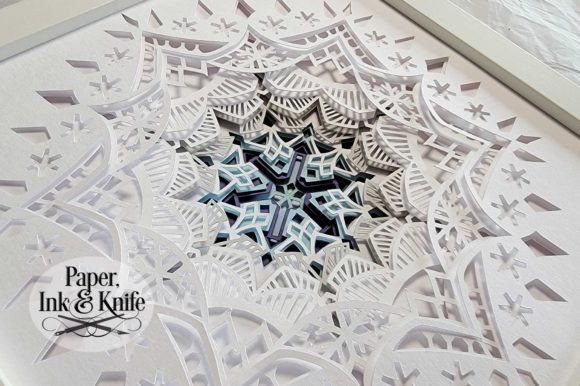
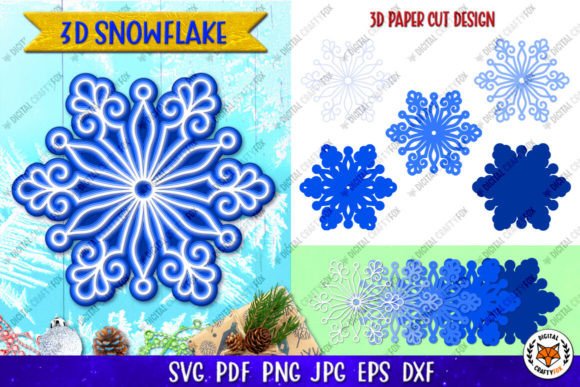
When researching digital cutting files, it is common to encounter products labeled as "3D" that are actually flat designs with simulated shading. A genuine 3D Snowflake Papercut SVG differs fundamentally in its construction. It consists of distinct, separate layers—in this case, five individual strata—that must be cut from separate pieces of material and assembled vertically. This distinction matters significantly for production planning and material selection.
Flat papercut designs typically rely on intricate internal weeding and are often limited to a single plane. While beautiful, they lack the physical presence required for hanging ornaments or shadow box displays. In contrast, the 5-layer structure of this 3D Christmas asset allows light to pass through varying depths, creating natural shadows that change based on ambient lighting conditions. For crafters comparing options, the tradeoff is clear: flat files are faster to cut and require no assembly, while layered 3D files demand more time, adhesive, and precision but yield a premium, tactile product that commands higher perceived value at markets or in personal collections.
Technical File Formats and Machine Compatibility
Versatility in file format is a critical decision factor when selecting digital assets. Different cutting machines and software ecosystems prioritize different vector standards. This 3D Snowflake Papercut SVG package addresses fragmentation by providing a comprehensive suite of formats, each serving a specific technical purpose.
- SVG Files: The industry standard for Cricut Design Space and Silhouette Studio (Designer Edition). These scalable vectors maintain crisp edges at any size and preserve layer separation, which is vital for assigning different colors or materials to each of the five snowflake tiers.
- DXF Files: Essential for users of the free version of Silhouette Studio, which does not support SVG imports. DXF files ensure that budget-conscious crafters can still access the 3D Christmas design without upgrading their software license.
- EPS10 Files: Designed for professional graphic designers using Adobe Illustrator or CorelDRAW. At 864x864 pixels, these files allow for deep editing, node manipulation, and resizing before exporting to a cutter-friendly format. This is particularly useful if you need to modify the snowflake’s geometry to fit a non-standard frame or ornament blank.
- PDF Files: Provided at 300 DPI on a transparent background, these serve as the bridge between digital and analog. They are indispensable for hand-cutters who do not own electronic cutting machines, allowing for precise tracing or direct printing onto cardstock for scissor work.
For those exploring sublimation as an alternative to paper cutting, the inclusion of high-resolution raster files changes the utility profile entirely. The 3600x3600 pixel JPG and PNG files (300 DPI) offer print-ready quality. While a papercut SVG is inherently about removing material, these raster images allow the 3D snowflake aesthetic to be transferred onto ceramic, metal, or polyester blanks. However, users should note that sublimation captures the image of depth rather than physical depth. Comparing these two approaches reveals a divergence in end-use: choose the vector layers for tangible, sculptural ornaments; choose the high-res PNG/JPG for durable, dishwasher-safe merchandise where physical layering is impossible.
Material Selection and Assembly Considerations
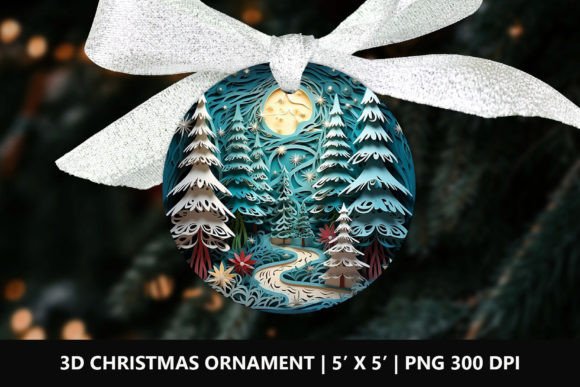
The success of a 3D Layered Christmas Ornament depends heavily on material choice. Because this design utilizes five layers, the cumulative thickness of the finished piece must be considered. Using standard 65lb cardstock may result in a fragile ornament that warps easily. Conversely, using heavy chipboard might make the ornament too bulky for delicate tree branches. Experienced crafters often find that 80lb to 100lb white cardstock offers the optimal balance of rigidity and ease of cutting for this specific layer count.
Assembly introduces another variable in the comparison between digital products. Some 3D snowflake files include built-in alignment tabs or registration marks. When evaluating this or similar products, verify whether the layers are self-aligning or if they require manual centering. Manual alignment of five concentric layers requires patience and tools like tweezers or silicone-tipped pens. If your primary goal is rapid mass production for a craft fair, a self-aligning file might be preferable even if the design is less intricate. If you prioritize artistic detail and have the time for meticulous assembly, this 5-layer manual stack offers superior visual complexity.
Color Accuracy and Digital-to-Physical Translation
A frequent point of friction in digital crafting is the discrepancy between screen display and physical output. When working with RGB-formatted files for both cutting and sublimation, color management becomes a necessary consideration. Monitors emit light using the RGB color model, while printers and physical materials reflect light using CMYK or pigment-based absorption. Consequently, the vibrant whites and subtle shadows seen on-screen may appear flatter or warmer in print.
For paper cutting, this is less problematic if using pre-colored cardstock, as the material color is consistent regardless of screen calibration. However, for sublimation users utilizing the included 3600x3600 PNG, test prints are mandatory. Lighting conditions, monitor resolution, and printer profiles all influence the final hue. Understanding this limitation prevents dissatisfaction; the digital file provides the structural data and color information, but the physical manifestation is subject to environmental variables. Always request support or clarification from the seller if color matching is critical to your project, as responsible vendors understand the nuances of cross-platform color reproduction.
Assessing Fit: When to Choose This Resource Over Others
Determining whether this specific 3D Snowflake Papercut SVG is the right investment requires an honest assessment of your current capabilities and project goals. This resource is best suited for makers who:
- Value Multi-Format Flexibility: You operate multiple machines or collaborate with others who use different software, making the inclusion of DXF, EPS, and PDF files a logistical necessity rather than a bonus.
- Seek Hybrid Production Methods: You want to offer both traditional paper ornaments and sublimated goods within the same holiday collection, leveraging a single design asset across different manufacturing processes.
- Prioritize Dimensional Aesthetics: Your target audience or personal preference favors the interplay of light and shadow over flat, graphic styles.
Conversely, alternative options may be more appropriate if you require instant-gratification projects with zero assembly, or if you lack the adhesive expertise to bond five layers cleanly. Beginners might also prefer simpler 3-layer designs to build confidence before tackling a 5-layer architecture. Additionally, if you require commercial licensing for large-scale manufacturing beyond personal or small-business use, always verify the specific terms of use associated with the digital download, as file ownership does not automatically confer unlimited reproduction rights.
Practical Tips for Optimizing the Cutting Experience
To maximize the utility of this 3D Christmas asset, consider the following optimization strategies during the evaluation and production phases. First, utilize the PDF hand-cutting files as a reference guide even if you are using a machine. Seeing the full-scale layout helps visualize the final assembly order and identifies potential fragility points in the design before wasting expensive materials. Second, when cutting the SVG layers, employ a lighter grip mat and sharp blade to prevent tearing on the intricate interior points characteristic of snowflake geometry. Dull blades drag through layered cardstock, compromising the clean edges necessary for seamless stacking.
Finally, engage with the creator community. Digital assets are living products; feedback regarding cut settings, assembly techniques, or material recommendations often emerges from user experience. If questions arise regarding layer sequencing or file compatibility, contacting the store directly is the most efficient path to resolution. A responsive seller is as valuable as the file itself, ensuring that your transition from digital download to physical 3D Layered Christmas Ornament is as smooth as possible. By approaching this resource with an understanding of its technical specifications, material requirements, and comparative advantages, you can make an informed decision that aligns with your creative objectives and production capabilities.